Automatic Analysis of Physical Identity Documents.
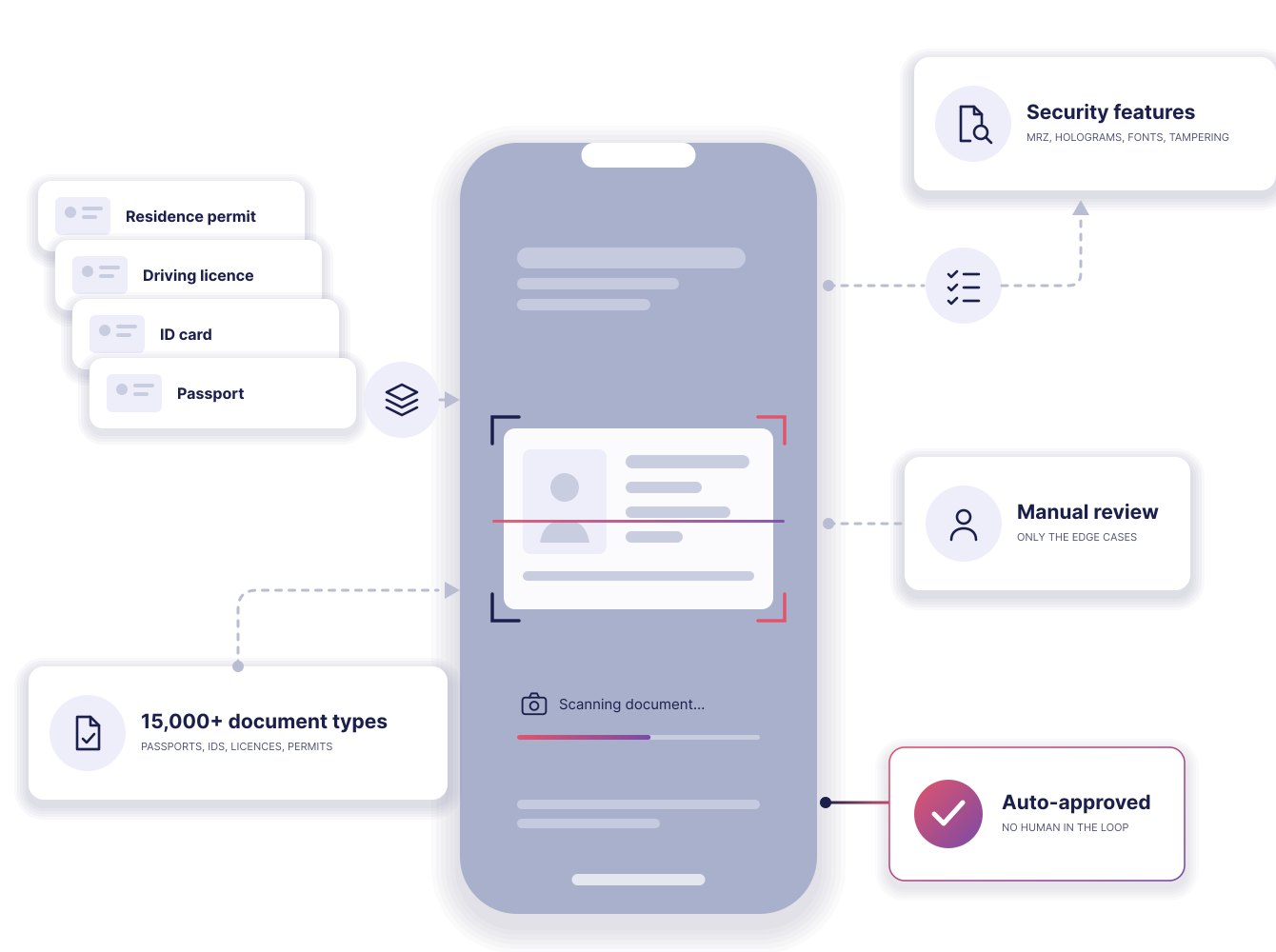
The system reads the machine-readable zone (MRZ), the visual zone and the electronic layer. It handles documents from 194 countries and provides an interface that guides the customer to a usable photo of the document.
Why compliance teams pick this
A bad photo is not a fake identity
Glare, motion blur, a thumb over the corner of the document — the capture app checks the photo's quality as it is taken and says what to fix.
Documents from 194 countries
The system verifies more than 15,000 identity document types, from its own reference library.
A fallback plan for when it fails
A fallback route is usually expected for when a customer's identity cannot be accepted. Ambiguous or damaged documents go to manual review together with their evidence.
What the verification engine covers
Data from the machine-readable zone (MRZ) and the visual zone, data from the electronic layer, and detection of tampering with the photo on the document. Documents from 194 countries, and an interface that guides the customer when a photo comes out wrong.
MRZ data read
Automatic reading of the document's data, to the ICAO standard.
Visual zone data read
First names, surnames, addresses, the issuing authority and the other information, read as written — special characters included.
Data comparison
The data on the document checked for consistency and agreement.
Manipulation detection
Detection of anomalies, alterations and manipulation of the identity document.
Electronic layer read
The data held in the electronic layer, readable over NFC, signed with the appropriate certificate.
Specimen detection
Recognition of specimen and demonstration documents.
Frequently asked questions
What about an old, damaged identity document?
Can the system read data written in a non-Latin alphabet?


Discover the future of identity verification
Book a demo or contact us — we'll show you how IDENTT fits your onboarding.
Book a call